In Yamagata, the morning air has turned almost wintry. The other morning, I noticed it was the day of the full moon, and found myself thinking about the sky. That same morning I read two pieces of news about paintings and skies: a study suggesting that Van Gogh’s The Starry Night was based on a real dawn sky, and the first auction in Germany of a painting by Bob Ross. Both were stories about how the moment a painting was born still draws people to it.
Was The Starry Night a dawn sky in July 1889?
Van Gogh painted The Starry Night in 1889 in Saint-Rémy, in the south of France. A swirling night sky holds large shining stars and a slender crescent moon. Today the painting belongs to the Museum of Modern Art (MoMA) in New York, and it is one of the best-known paintings of a night sky in the world.
In October 2026, a team led by Elijah Jeong-hyun Kim in South Korea published a paper in the journal Scientific Reports. Mr. Kim runs a company in Seoul that makes telescopes, and he is also a doctoral student at Kyung Hee University. The team recreated the night sky for every night of June and July 1889 and compared it with the positions of the moon and stars in the painting.
They found that before dawn around July 22, a thin crescent moon, Venus, and the Hyades star cluster in Taurus all fit within the frame of the painting in the eastern sky. The painting has long been thought to date from June, but the moon at that time did not have the slender shape seen in the picture. The team also drew on clues such as the mention of cicadas in the letters Van Gogh exchanged with his brother Theo.
In early summer 1889, Van Gogh wrote to Theo that he had looked out of his window long before sunrise, and that there was nothing but the morning star, which looked very big. José Luis Aragón, a physicist at the National Autonomous University of Mexico who was not involved in the study, called it “a careful and genuinely interdisciplinary study” and said, “The painting is not pure fantasy.” The sky may combine many nights, and the date remains one proposal, but the research shows again how closely Van Gogh watched the real sky.
A painting made on television goes to Germany
The second story is about Bob Ross. On the American public television program The Joy of Painting, he showed viewers how to complete a landscape within a half-hour program. The show began in 1983 and is still watched around the world.
On December 5, 2026, the Munich auction house Ketterer Kunst will offer Bob Ross’s Mountain Splendor (1986). It is the first time a Bob Ross painting has been auctioned in Germany. The oil painting was made on camera for Season 7, Episode 8 of the program, and it is estimated at 40,000 to 60,000 euros. Before the sale, previews will be held in Frankfurt, Cologne, Hamburg, Berlin, and Munich.
The painting is one of thirty works that Bob Ross Inc. donated to American Public Television (APT). All net proceeds go to support public television stations across the United States. So far, thirteen paintings have sold, raising more than 2.4 million dollars. The program has aired in Germany since 2001, and Joan Kowalski of Bob Ross Inc. says, “Bob wanted to share art with everyone.” A painting by someone who painted in front of television viewers is now supporting many people once again.
Why we stop in front of a painting
The Starry Night and Mountain Splendor are both beautiful on their own. Even so, once we know about the morning Van Gogh watched the morning star from his window, or the time Bob Ross spent painting for the people watching at home, the same painting looks a little different. Where it was painted, with what feelings, and for whom: I think that story is what makes us stop in front of a painting.
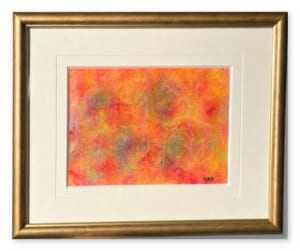
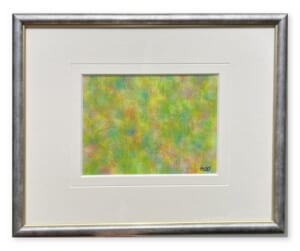
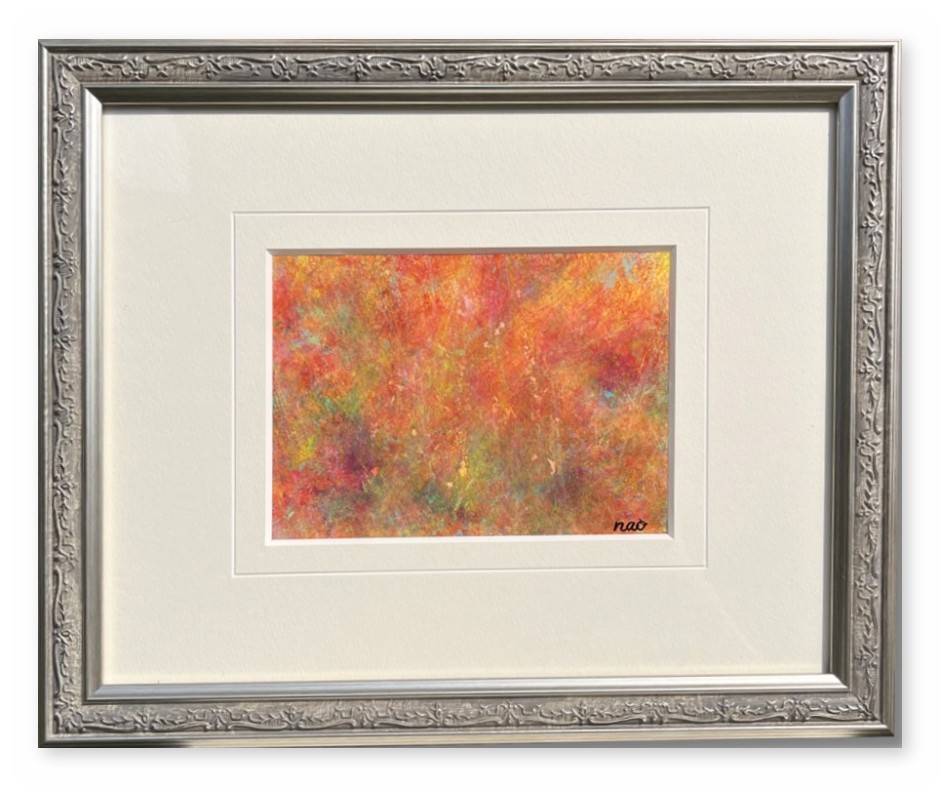
My commissioned art begins with listening to the person’s story before I paint. What they have cherished, and what lies ahead. That story becomes the source of the colors and shapes in the painting. When I hand over a work, I also add words about the feelings it was born from. The record of where a painting was born and whom it has lived with becomes, as time passes, an important part of the painting itself.
Paintings for yourself or someone dear to you are described on the PERSONAL ORDER ART page, and paintings for companies and clinics on the BUSINESS ART page.
Summary
- A 2026 study proposes that the sky in The Starry Night matches the pre-dawn sky around July 22, 1889
- Van Gogh wrote to his brother Theo about a morning when he saw the morning star from his window
- Bob Ross’s Mountain Splendor, painted on his program, will be auctioned in Germany for the first time on December 5, with proceeds supporting public television
- The story of how a painting was born becomes, over time, an important part of the painting
Sources
Scientific Reports (The actual sky of Van Gogh’s Starry Night: a multidisciplinary reconstruction) 2026
Phys.org (New study traces van Gogh’s famed ‘Starry Night’ to an actual night sky from 1889) October 2026
Space.com (Van Gogh’s ‘The Starry Night’ depicts the sky on July 22, 1889, researchers find) October 2026
Van Gogh Letters (Letter 777, To Theo van Gogh. Saint-Rémy-de-Provence, 1889)
The Museum of Modern Art (Vincent van Gogh, The Starry Night)
PR Newswire (Bob Ross Original Painting to Be Auctioned in Germany for the First Time to Benefit U.S. Public Television Nationwide) 2026
ARTnews (Even German Bidders Can Now Pitch In to Support US Public Television, with the Country’s First Auction of a Bob Ross Painting) 2026