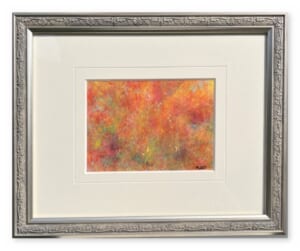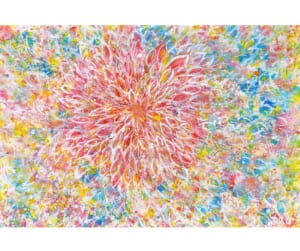
The entrance is the one place in a home we pass through every day. When we put on our shoes before going out, when we come home and let out a breath, when we welcome guests. A painting there will be seen many times a day. Here I have gathered how to choose a painting for the entrance: where the Japanese word for entrance, genkan, comes from, how feng shui sees the entrance, and what to look at when you actually hang a picture.
Genkan began as a Zen word
Genkan was originally a word of Zen Buddhism. According to Japanese dictionaries, it meant “the gateway into the profound way,” the entrance to deep teachings. It later came to mean the entrance to the abbot’s quarters at a Zen temple, then the formal entrance with a raised step in samurai residences, and finally the entrance of an ordinary home, as it does today.
Not simply a door, but the boundary where we step from the outside world into a place that matters. Seen that way, it feels natural to care about what we place there.
In feng shui, the entrance is where energy comes in
In feng shui, the entrance is described as the place where qi, or energy, enters, and as the face of the home. Articles and books that introduce feng shui often say that, whatever direction the entrance faces, it matters to keep it bright, uncluttered, and clean.
For paintings, landscapes with mountains and pictures of flowers are often recommended. There is also an idea that certain colors suit certain directions. Explanations of where to hang a picture and which colors to use can differ between schools and books, though. Perhaps it is enough to treat feng shui as one long-standing way of thinking, and take from it what feels right.
What to look at when you hang a painting
- Light: Does a light fall on the painting? Entrances tend to be dark, and knowing where the light is helps the colors look their best
- Size: Will it hang on the wall or sit on top of the shoe cabinet? A size that does not get in the way of people passing keeps daily comings and goings comfortable
- Height: One guideline is to place the center of the painting about 145 cm (57 inches) from the floor (I wrote more in the article on how high to hang a painting)
- Color: Whether the colors suit both how you feel when you leave and how you feel when you come home
From someone who hangs my painting by the front door
A woman in her twenties who displays my commissioned art at her entrance sent me these words: “I display it by my front door. Every day I draw power from my own aura in it. It’s a painting that raises your body temperature just by looking at it, a painting that makes your heart flutter.” It is a green painting inspired by a forest. Because it is a place she passes every day, I think the painting stays close to her everyday life.
Before I paint a commissioned work, I listen to the person’s story. When the painting is meant for an entrance, I also ask about the light and size of that space and how the person feels as they pass through it each day, and I think about color and size from there. Paintings for yourself or someone dear to you are described on the PERSONAL ORDER ART page, and paintings for a company reception or entrance hall on the BUSINESS ART page.
Summary
- The Japanese word genkan comes from a Zen phrase meaning “the gateway into the profound way”
- In feng shui, the entrance is where energy comes in, and keeping it bright and clean is considered important
- Mountain landscapes and flower paintings are often recommended; detailed rules differ between schools
- Looking at light, size, height, and color helps the painting be a pleasure to see every day
Sources
Kotobank (Digital Daijisen, “Genkan”) in Japanese
Kotobank (Sekai Daihyakka Jiten, “Genkan”) in Japanese
athome (風水による玄関の運気アップ方法は?おすすめカラーやNGアイテムを徹底解説) 2023, in Japanese
Rakuten Ichiba (【玄関の風水】方角ごとに色や置物は違う!鏡や絵、植物は何がいい?) in Japanese
Mermaid nao official website (VOICES)
Related reading
- Art for the Living Room and Feng Shui Directions: Colors for East, West, South, and North
- How High Should You Hang a Painting? The 145 cm (57-Inch) Guideline, Above a Sofa, and in Rooms Where You Sit
- The Same Painting Changes Meaning With Its Place: Rothko’s Chapel and Dzubas’s Dream
- One Painting, in an Executive’s Room. What Choosing It Conveys