A doctor writes a prescription — not for medicine, but for a visit to an art museum.
Initiatives like this are spreading around the world. They are called "social prescribing," and, when they use the arts and culture, "cultural prescribing."
In this post, I introduce what is happening in Canada, the UK and Japan, along with the numbers.
Museum prescriptions at the Montreal Museum of Fine Arts
In November 2018, the Montreal Museum of Fine Arts in Canada began working with an association of French-speaking physicians so that doctors could "prescribe" museum visits to their patients.
Participating doctors could write up to 50 prescriptions a year, each admitting up to two adults and two children to the museum for free — so that patients could go to see art with family members or caregivers.
The program was described as helping a wide range of people, including those living with mental health difficulties and chronic illnesses. It was a new attempt to see the museum as one of the places that support health of mind and body.
In England, the National Health Service set out in its Long Term Plan, published in 2019, to expand social prescribing nationwide.
In social prescribing, specialists called "link workers" listen to patients and connect them with activities that suit them — local exercise groups, volunteering, art and music activities, and more.
According to an analysis by a research team at University College London, published in The Lancet Public Health in 2025, about 1.3 million people were referred to social prescribing in 2023 alone. More than 3,300 link workers are now employed across England.
More than 3,000 studies reviewed by the WHO
In 2019, the World Health Organization's Regional Office for Europe published a report reviewing more than 3,000 studies on the arts and health.
The report shows that arts activities — looking at and making art, music, dance and more — may contribute in many ways to preventing illness, maintaining mental and physical health, and supporting people living with illness.
The idea that "the arts are not a luxury, but one of the things that support health" is gradually spreading around the world.
"Cultural prescribing" has begun in Japan too
Initiatives have begun in Japan as well.
At the "Co-Creation Center for Art Communication toward an Inclusive Society," centered on Tokyo University of the Arts, 37 organizations are working together to develop and put into practice "cultural prescribing." As loneliness and social isolation become serious issues, it aims to create places where people can connect gently through art and be themselves.
The Contemporary Art Museum, Kumamoto is working with Kumamoto City and Kumamoto University on a "Kumamoto version" of cultural prescribing, and the Shiga Museum of Art is also running projects aiming to be a museum that contributes to well-being.
A small prescription in everyday life
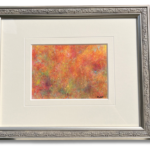
A trip to an art museum may be a special outing. But a painting hanging at home or at work comes into view many times every day.
In the morning before leaving the house. Between tasks at work. At night, at the end of the day. Just a few seconds of glancing at a painting can sometimes gently ease the heart.
Of course, a painting is not a medicine that cures illness. But keeping something that moves your heart close by can be one small habit of taking care of yourself.
That is why I paint — to bring such a painting into the everyday life of someone.
Sources
Montreal Museum of Fine Arts and Médecins francophones du Canada (museum prescription program, 2018); CBC News (October 2018)
Bu, F. & Fancourt, D., et al. (National roll-out of social prescribing in England’s primary care system, The Lancet Public Health, 2025); UCL (Social prescribing rises sharply among England’s GPs, 2025)
WHO Regional Office for Europe (What is the evidence on the role of the arts in improving health and well-being? A scoping review, 2019)
Tokyo University of the Arts, Co-Creation Center for Art Communication toward an Inclusive Society (JST COI-NEXT) — in Japanese
Bijutsu Techo (cultural prescribing at the Contemporary Art Museum, Kumamoto) — in Japanese
Shiga Prefecture (Shiga Museum of Art project documents) — in Japanese