“I would love to commission a painting, but I have no idea how much it costs.”
I often hear this from people looking into commissioned art.
In fact, commissioned paintings range from a few thousand yen to several hundred thousand yen, and overseas some cost the equivalent of several million yen.
They are all called commissioned paintings, so why such a gap?
Based on examples in Japan and abroad that I researched in October 2026, this post looks at the price range and what creates the differences.
Commissioned painting prices fall into four broad ranges
1. From a few thousand yen to around 30,000 yen
This range is mostly portraits, illustrations, and requests through sites where individuals buy and sell their skills.
For example, the Japanese skill marketplace Coconala has a category for paintings and art production with about 750 listings. Most of the top-ranked offers were priced at 3,000 to 25,000 yen (as of October 9, 2026).
Many are easy to order: painted from a photo, delivered as digital data, or small in size.
2. Around 30,000 to 100,000 yen
Smaller original paintings, ordered through services that introduce artists or directly from a painter.
Some agency services list production fees from 30,000 yen, and some painters offer a piece of about 20 cm square, framed, from 50,000 yen.
3. Around 100,000 to 300,000 yen
Original oil or acrylic paintings, painted over time.
In Japan, one painter lists an F6 oil painting (41 × 31.8 cm) at about 130,000 yen including tax (frame not included), with larger sizes at 20,000 yen per gou, the Japanese canvas size unit (before tax).
Overseas as well, abstract portraits painted from a conversation with the client are offered at around 1,000 US dollars (about 150,000 yen).
4. 500,000 yen and above
Large works, corporate commissions, plus artists who limit how many commissions they take.
Some artists overseas limit their commissions each year and offer tiers from about 3,500 to 17,500 US dollars (about 500,000 to 2.6 million yen).
In one case, framing alone started at 200,000 yen.
Seven things that shape the price
1. Original or reproduction
An original is one of a kind. A reproduction printed from the same image, such as a giclée print, is far more affordable.
2. Size
In Japan, painting size is measured in a unit called gou, and many painters set their prices by it. The larger the work, the more paint and time it takes.
3. Materials and painting time
Paintings built up in many layers of oil or acrylic take time, since each layer must dry before the next.
Painting time itself makes up a large part of the price.
4. Time spent listening
Painting from a photo and painting after hearing the client’s story take very different amounts of time.
The longer the listening, the more of it is included in the price.
5. Framing and shipping
Whether the price includes a frame makes a big difference to the total. Frames range from a few thousand yen to several hundred thousand yen.
6. Scope of use
As a rule, copyright stays with the artist unless there is an agreement to transfer it.
Will you only hang it at home, use it in a company brochure or on a website, or print it on products? As the use widens, the price usually changes.
7. The artist’s experience, plus waiting time
Years of experience, exhibition history, and how many commissions an artist can take each month all affect the price and the wait. Some artists have waiting lists of several months.
Painting from a photo, painting from a conversation
Commissioned paintings come in two broad approaches.
A painting from a photo captures the likeness of a face, a figure, a pet or a house. It is easy to picture the result and to compare artists.
A painting from a conversation turns what was said, not how someone looks, into the painting. Color and form change with what you talk about. The result is harder to picture, but it becomes a piece like no other.
Neither is better. If you want to keep a face or a figure, choose a photo. If you want to keep what you have cherished, choose a conversation. I believe it comes down to what you want to keep.
One person who received a painting made from our conversation once wrote to me:
“I rambled all over the place, and still it became one painting. That is truly amazing!” (a woman in her 20s)
More than high or low: what are you paying for?
Even at the same 100,000 yen, what you get differs from artist to artist.
Is it paint and time for a large canvas, time for meetings, or the frame? Few artists spell out the breakdown.
Rather than lining up price tags, looking at what arrives for that price brings you closer to the painting that suits you. Feel free to ask the artist about anything unclear before you order.
Things worth checking before you order
With commissioned art, comparing on price alone can easily end in “this isn’t what I expected.” Checking these points first gives peace of mind.
- Whether the price includes the frame, shipping, tax, plus consultations
- Whether you can see a preview first, and how many revisions are included
- How long delivery takes
- Cancellation and refund terms
- Payment methods
- How uses beyond hanging the work are handled
My order art: prices, and what they include
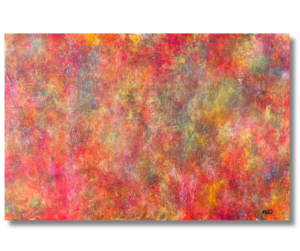
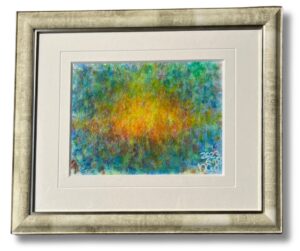
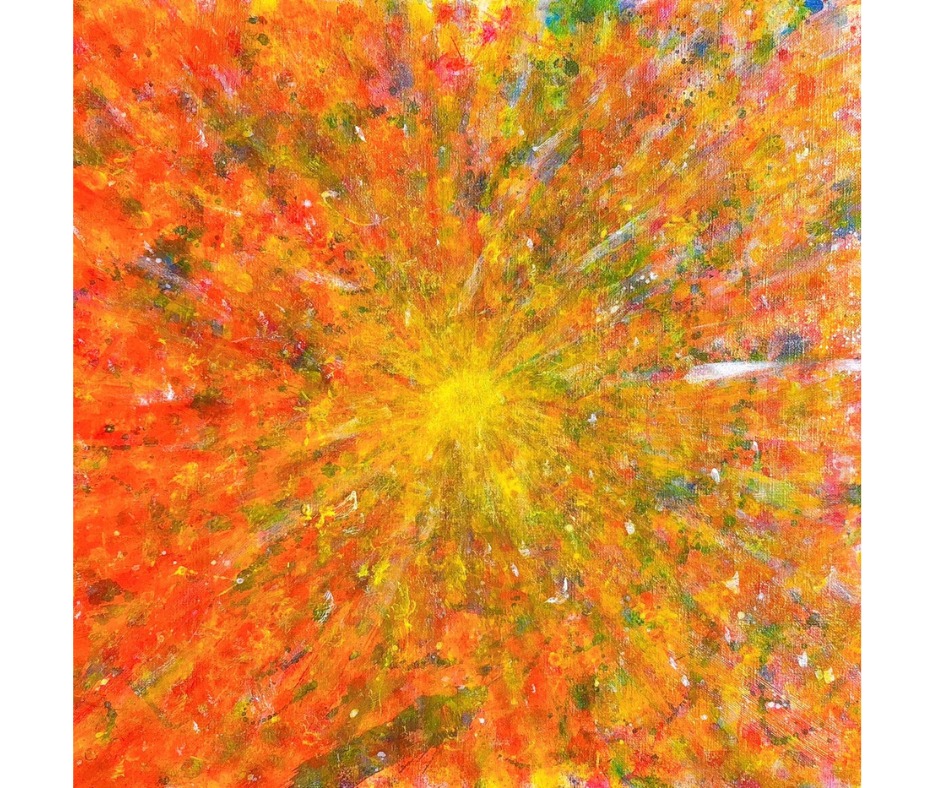
I paint portraits without form.
I do not paint faces or figures. I listen, sense what the person has cherished and how they want to live from here, then layer color and light again and again into one original painting.
PERSONAL ORDER ART: 198,000 yen (tax and domestic shipping included)
Includes one original painting, a hearing session beforehand, a title for the work, a message about the work, framing, plus shipping within Japan.
BUSINESS ART: from 239,000 yen (tax and domestic shipping included)
An order that turns a company’s philosophy, or the story of its founding, into one painting. It comes in five sizes; anything larger is decided through consultation.
For use on a company website or in materials, the guideline is 30 to 80 percent above the listed price.
This price covers not only painting time, but also time listening to you, time layering color, scraping it back, layering again, plus time writing the words and the letter that accompany the work.
I do not show a preview of the finished work in advance. The colors emerge from our conversation, so even I do not know them before I start painting.
One person who received a work kindly told me:
“Every time I look at it, I feel as if I am being praised, and it makes me happy.” (a woman in her 40s)
The price and size table is on the pricing page, and the terms for using the artwork are on About the Use of Artwork.
Sources
Coconala (requests for painting and art production)
This is Original (custom-made paintings and art)
fukeiga.com (Energy Art)
TAJIRO (Order paintings)
Heather Eck (Spirit Portraits)
Dominique Hurley (Soul Energy Portraits – Energy Painting Commissions)
AURA ART: Takumi Bando’s Aura Art (Order flow)
Related reading
- How to Commission an Abstract Painting: 5 Things to Consider Before You Ask
- How high should you hang a painting?
- The History of Portraiture: Why People Have Had Themselves and Their Loved Ones Painted
- Why hang abstract art: not a painting you “don’t get,” but one that leaves room
- One painting in a leader’s room: what your choice conveys
- Placing one painting in your daily life: art and states of mind
- PERSONAL ORDER ART