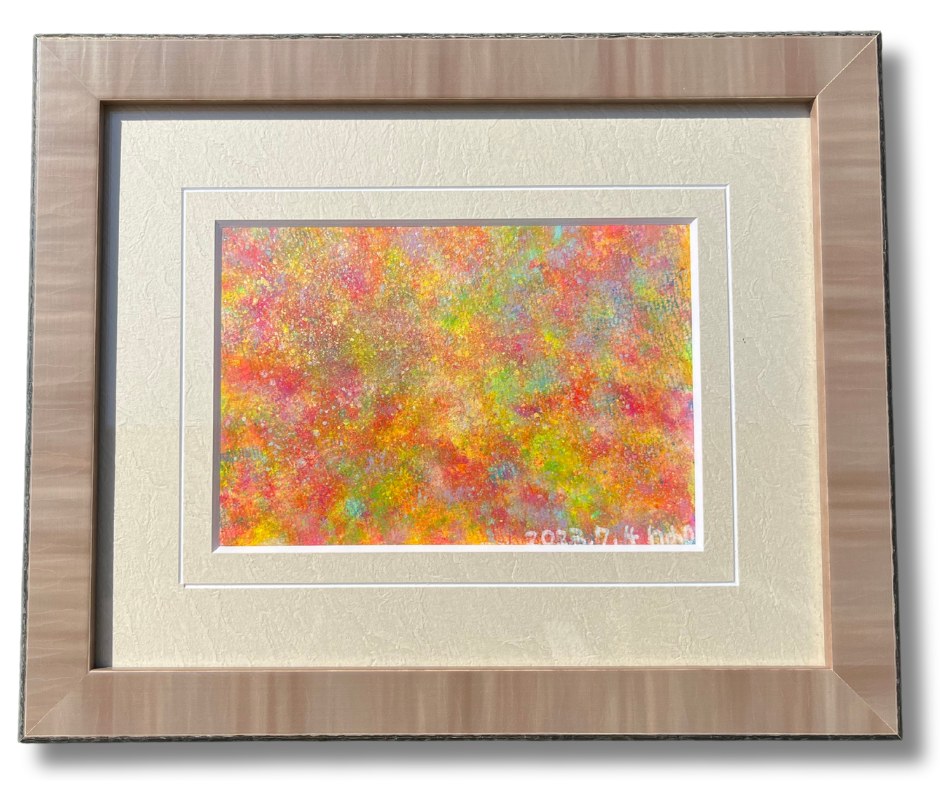
Once an original painting comes home, where and how should you hang it so it stays beautiful for years? The conservators who look after museum collections have published clear guidelines for people who hang art at home. From the guidance of the Canadian Conservation Institute (a Government of Canada agency) and Icon, the UK's professional body for conservation, here are five things worth checking when you hang an original painting at home.
1. Choose a wall away from the window. Fading from sunlight cannot be undone
For works on paper, the Canadian Conservation Institute writes that exposure to light, natural as well as artificial, causes colours to fade and paper to discolour, and that light damage cannot be reversed. For paintings, it recommends making sure that no direct sunlight falls on them at any time of the day.
Icon also notes that light damage is cumulative and irreversible. It advises avoiding strong south-facing light and highly recommends framing with UV-filtering glass or acrylic.
What to check before you hang it
・Does sunlight from a window or skylight reach that wall in the morning, at noon or in the evening?
・If the room gets sunlight, can you use curtains or blinds?
・Does the frame's glass or acrylic filter out ultraviolet light?
2. Aim for 40–60% humidity. Above all, avoid sudden changes
The Canadian Conservation Institute recommends displaying paintings where relative humidity and temperature are fairly constant, not very high (above 60%) or low (below 40%), and where levels do not change quickly. For works on paper, Icon gives an ideal of 45–60% relative humidity and 16–19°C.
Japan is a country where humidity changes greatly with the seasons. According to the Japan Meteorological Agency's normals (1991–2020), average humidity in Tokyo is 51% in January, 52% in February, 75% in June, 76% in July and 75% in September. From the rainy season into early autumn, month after month stays above the 60% guideline.
According to the Canadian Conservation Institute, paper swells and expands when humidity is high, and long periods of high humidity raise the risk of mould. At home, it is best to hang art in a room where people usually spend their time, rather than a damp basement or an attic or storeroom where heat and cold swing widely.
3. Keep it out of the direct airflow of air conditioners and heaters
The Canadian Conservation Institute lists places directly in the airflow of heating and cooling vents or heaters, and spots near doors and windows that are often opened, as places where temperature and humidity change quickly. The space above a fireplace has long been a place of honour, but it also suggests that another wall is a better choice for the painting.
Icon explains that air near radiators and spotlights becomes dry, and that air currents there gather dust. Hanging a picture directly against the inside of an outside wall is another spot best avoided if you can. The Canadian Conservation Institute adds that outside walls with a good vapour barrier and insulation can be used.
4. Touch the surface of the painting as little as possible
The Canadian Conservation Institute writes that handling is a major cause of damage to artworks. Avoid touching the paint surface or the back of the canvas, and never press on the back. For works on paper, it also recommends white cotton gloves so that oils and salts from your hands are not left behind.
Dust and grime mixed with cooking oils build up on the surface little by little over time. Before wiping the surface yourself or trying traditional remedies (such as cleaning with bread crumbs), it is safest to consult a professional conservator.
5. Moving it on cold days, and where to store it
The Canadian Conservation Institute advises against transporting a painting in an unheated vehicle in cold weather. When you store a painting during a move or while changing displays, a room with settled temperature and humidity is better than a damp basement or a dry attic.
Once you choose the place, you see it there every day
Seen side by side, the best places for an original painting overlap with the places that are comfortable for people: a room out of strong sunlight, where damp does not linger and it never turns suddenly hot or cold, and the wall that catches the eye of the people who spend every day there. For the right height, see theHow High Should You Hang a Painting?article; for choosing art room by room, see our articles on theliving roomandbedroomfor more.
In my order art, I listen to your story before I paint, and I give you a letter together with the original painting. I also ask where you plan to hang it, and we sometimes decide the size and colours together. For a piece for yourself or someone dear to you, seePERSONAL ORDER ART; for a piece for your company or clinic, seeBUSINESS ARTfor details.
Summary
- Hang it on a wall away from the window. Fading from light cannot be undone. A frame with UV-filtering glass or acrylic is recommended
- Aim for 40–60% humidity (Canadian Conservation Institute) and avoid sudden changes. Summer in Tokyo averages around 75%
- Avoid airflow from air conditioners and heaters, the space above a fireplace, and spots near doors and windows that are often opened
- Do not touch the painting's surface. If dirt concerns you, ask a professional conservator
- Do not move it in an unheated car on cold days. Store it inside a room where people live
[References]
Canadian Conservation Institute (Basic care – Paintings)
Canadian Conservation Institute (Basic care – Works of art on paper)
Icon, The Institute of Conservation (Caring for your treasures: Art on paper)
Japan Meteorological Agency (Past weather data: Tokyo normals, annual and monthly values)
Related reading
- How High Should You Hang a Painting? The 145 cm (57-Inch) Guideline, Above a Sofa, and in Rooms Where You Sit
- Art for the Living Room and Feng Shui Directions: Colors for East, West, South, and North, and a Painting for the Room You Live In
- Art for the Bedroom: Calming Colors for Sleep and the First Painting You See in the Morning
- Choosing a Painting for Your Entrance: Feng Shui Ideas and the One Picture You See Every Day