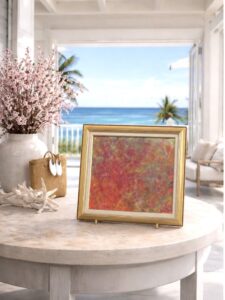
India has a spring festival called Holi, in which people smear and throw colored powder on one another. Working with color, I have always been drawn to this scene.
Celebrating the victory of good over evil
Holi is an important Hindu festival that heralds the arrival of spring. One of its origins is the myth of a demon king and his devout son, Prahlada. The demon's sister Holika, who tried to burn the son in a fire, is herself burned to death instead. It is said to be a day celebrating the victory of good over evil.
One theory holds that smearing color represents the ashes of the burned Holika falling on people. It is also said to come from the story of the playful god Krishna painting color on the face of his beloved Radha.
Originally, powdered medicinal herbs
The colored powder used at Holi is called gulal. It was originally made from medicinal plants recommended by Ayurvedic (traditional Indian medicine) physicians, such as neem and turmeric.
Throwing color at one another is also said to have had the meaning of protecting the body at the change of seasons. Color served both as prayer and as seasonal care for health.
The experience of bathing in color
A painting is something you "look at" in color. Holi is a festival where you "bathe" in color. It is said that with the whole body covered in color, differences of status and position become invisible for a single day.
That color has long been thought to hold such power is encouraging for someone who paints. It makes me feel that the colors of a single painting can change the viewer's mood for the day, at least a little.
In Mermaid nao's commissioned art, too, I sometimes choose colors that make you feel like spring.
Sources
Wikipedia (Holi)
Bharat Hub (The history, charm and cautions of Holi, India's colorful spring festival)
Indian restaurant Mumbai (Holi, the Indian festival celebrating the arrival of spring)
Related articles