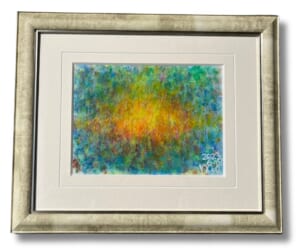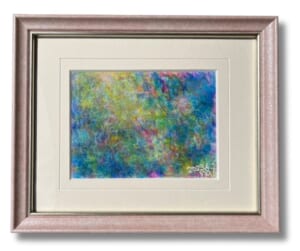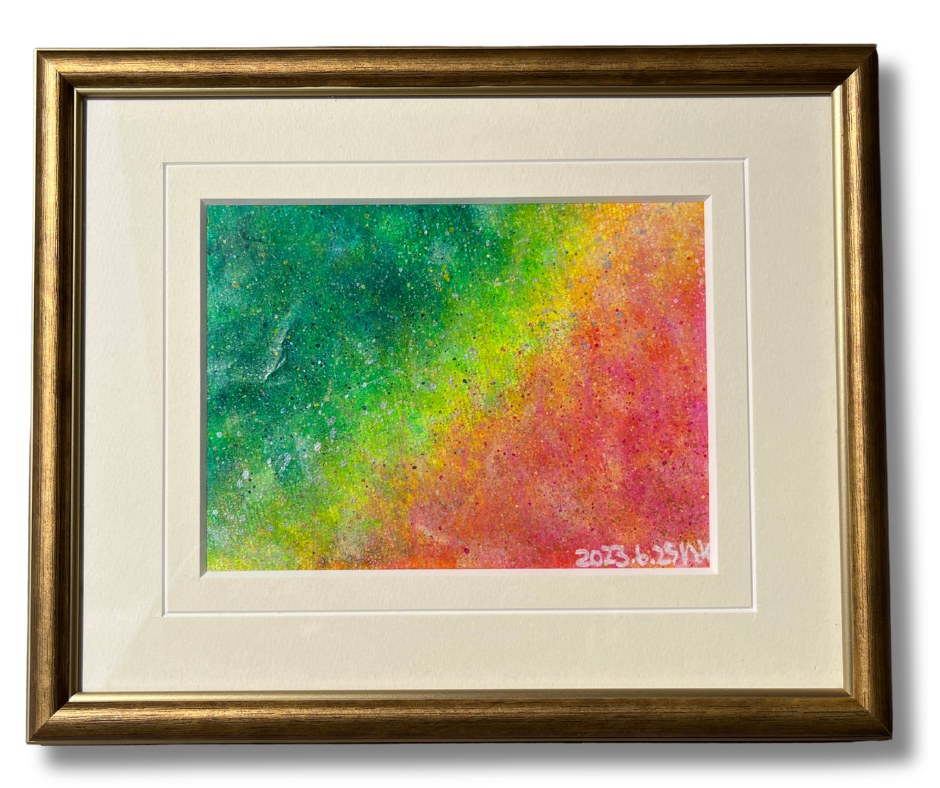
Your five senses are what tell you who you are. That's why someone else's senses won't do. You must never forget your own senses, and you must never lose them.
自分の感情や正義に迷うとき、あるいは他者との違いに疲れてしまったとき。そんな方の心に、調和と自己受容の光をそっと流したいと願いながら描いた一枚です。
作品に込めた想い
自分の感情や正義に迷う方、他者との違いに疲れた方へ。相反するものを包み込み、心の内側に調和と自己受容の光を流すエネルギーを込めました。
正義を振りかざせば悪となり、悪の中にも正義が潜む。そんな世界で、いくつもの「正義」が交わり溶け合う場所に、平和が生まれるように――という祈りを込めて制作しました。
Concept & Background
この作品は、自分の中にある「盾」と「矛」、つまり自分を守る力と、自分の真実を貫く力の両方をテーマにしています。どちらか一方だけでは足りません。相反するふたつを自分の中に併せ持つこと、そしてどんな自分も間違いじゃないと思えることこそが、本当の調和への一歩なのだと思います。
制作にあたって
このアートを観た方が、どんな自分も間違いじゃないと、心がふっとゆるみ、安心とあたたかさに包まれますように。
同じ作品を再びお届けすることはできませんが、パーソナルオーダーアートでは、お一人おひとりとの対話を通して、あなただけの一枚を描かせていただきます。Usage of Artwork
More about this painting
The origin of the word "mujun"
The title "shield and halberd" comes from the ancient story behind the Japanese word "mujun," meaning contradiction — literally "halberd-shield."
The Han Feizi, a Chinese philosophical text from the Warring States period, tells this story. A man from the state of Chu was selling shields and halberds. He boasted, "This shield is so strong that nothing can pierce it." Then he said, "This halberd is so sharp that it can pierce anything." Someone asked, "Then what happens if you strike that shield with that halberd?" — and the seller could not answer.
From this story, things that do not add up came to be called "mujun."
We live holding contradictions
The wish to protect and the wish to move forward. The wish to connect with others and the wish to be alone. In our hearts, opposite feelings always exist at the same time, like a shield and a halberd.
This painting is for times when you are unsure of your own feelings or sense of what is right, or when you are worn out by differences with others. Holding contradictions is not a mistake. I think it is a sign that the heart is moving richly.
Your five senses tell you who you are
I gave this painting the words: "Your five senses tell you who you are. So someone else's senses won't do."
Sight, hearing, smell, taste, touch — the idea of dividing human senses into five is said to go back to the ancient Greek philosopher Aristotle. Even when we see the same landscape or hear the same music, each of us feels it differently. What you find beautiful and what moves your heart — those senses are the very reason you are you.
Don't let go of your own senses
When other people's opinions and ideas of what is right threaten to sweep you along, remember what you saw with your own eyes, heard with your own ears, and felt with your own heart.
Both the shield and the halberd are precious parts of you. I would be happy if this painting could gently support you in trusting your own senses.
Sources
Han Feizi, "Nan Yi" chapter
Aristotle, On the Soul (De Anima)
¥60,000
tax, frame & domestic shipping included
approx. USD $400
A one-of-a-kind original painting.