When I think about color, the painter Paul Klee is the person I remember first. That is because his sense of color changed greatly after one journey.
A journey to Tunisia
In April 1914, Klee traveled to Tunisia in North Africa with fellow painters. Strong sunlight, and the colors of towns overflowing with light. His use of color is said to have clearly changed before and after that experience.
In his diary during the trip, Klee wrote, "Color and I are one," and "I am a painter." It was April 16, 1914. These lines are often quoted as the moment Klee became a "painter of color."
Turned into shapes, colors begin to move
After the trip, Klee replaced the scenery in front of him with simple shapes such as squares and triangles, and laid color on them. Buildings, trees and people are arranged like colored sections.
Strangely, when things are simplified this way, the colors resonate with one another, and the picture seems to move like music. Klee was also deeply involved in music, and treated painting and sound as close to each other.
A place teaches you color
What I love about Klee's story is that his sense of color changed not at a desk, but in the light of a place he traveled to. Where you are, and what light you are bathed in, changes how you take in even the same color.
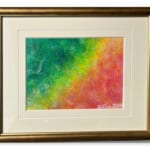
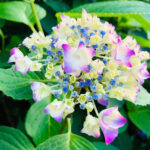
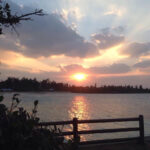
I paint in Yamagata, Japan. The glare of snow, the green of summer, the light reflected off the river. I think the light of this land is, little by little, deciding my colors.
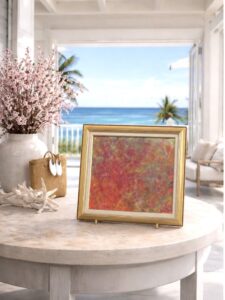
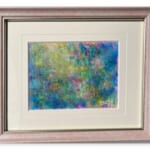
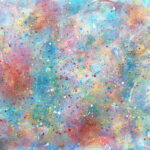
In Mermaid nao's commissioned art, I sometimes include the light and colors of places you have spent your life in a single painting.
Sources
Casa BRUTUS (What Paul Klee brought back from Tunisia / Yoshio Suzuki's "Books and Exhibitions")
Shizuoka City Museum of Art blog (A foreign land: the discovery of color)
Misuzu Shobo (The Diaries of Paul Klee, Japanese edition)
Wikipedia (Paul Klee)
Related articles