Eric Carle, who created The Very Hungry Caterpillar, is an artist I often think of when I consider how to make colors.
First, he made his own colored paper
Carle did not start by drawing straight onto paper. He first made a large stock of "colored tissue paper," then cut and pasted it to build up shapes.
On thin paper primed with varnish, he applied acrylics, watercolors and poster paints with his fingers and brushes. Besides brushes, he used sponges, scraps of carpet, even the soles of shoes to create distinctive patterns.
He kept the finished colored papers in stock, and when making a picture he chose the colors and patterns he needed, cut them out, and layered them. It is a way of working in which the time spent preparing becomes the quality of the work itself.
About The Very Hungry Caterpillar
His best-known book, The Very Hungry Caterpillar, has been translated into more than 70 languages and has sold more than 55 million copies.
The size of the paper changes from page to page, and the places the caterpillar has eaten are real holes. Not only the pictures but the form of the book itself is a device.
Carle was born in New York State in 1929 and grew up in Germany. After graduating from art school in Stuttgart, he returned to the United States, worked as a graphic designer, and then entered the world of picture books. He died in 2021 at the age of 91.
The time spent "making color" is part of the work
When I paint, I also layer materials. Since learning how Carle worked, I have come to feel that I do not need to separate "the time spent making colors" from the work itself.
Even on days when things do not go as I want, the time spent painting and storing up colored paper is not wasted. Simply moving my hands leads to the next painting.
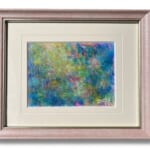
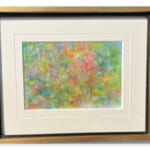
In Mermaid nao's commissioned art, too, I value the time spent making the ground and the colors as part of the work.
Sources
Kaiseisha (About Eric Carle)
Museum of Contemporary Art Tokyo (Eric Carle exhibition: It all began with The Very Hungry Caterpillar)
PLAY! official (Eric Carle's techniques 1: How to make "tissue paper")
Wikipedia (Eric Carle)
Related articles