When I paint, I layer several different materials on top of one another. One of them is iwa-enogu, the mineral pigment used in traditional Japanese painting (nihonga).
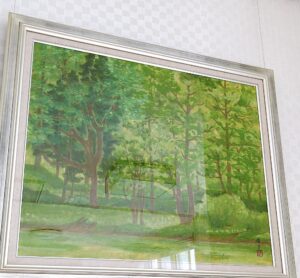
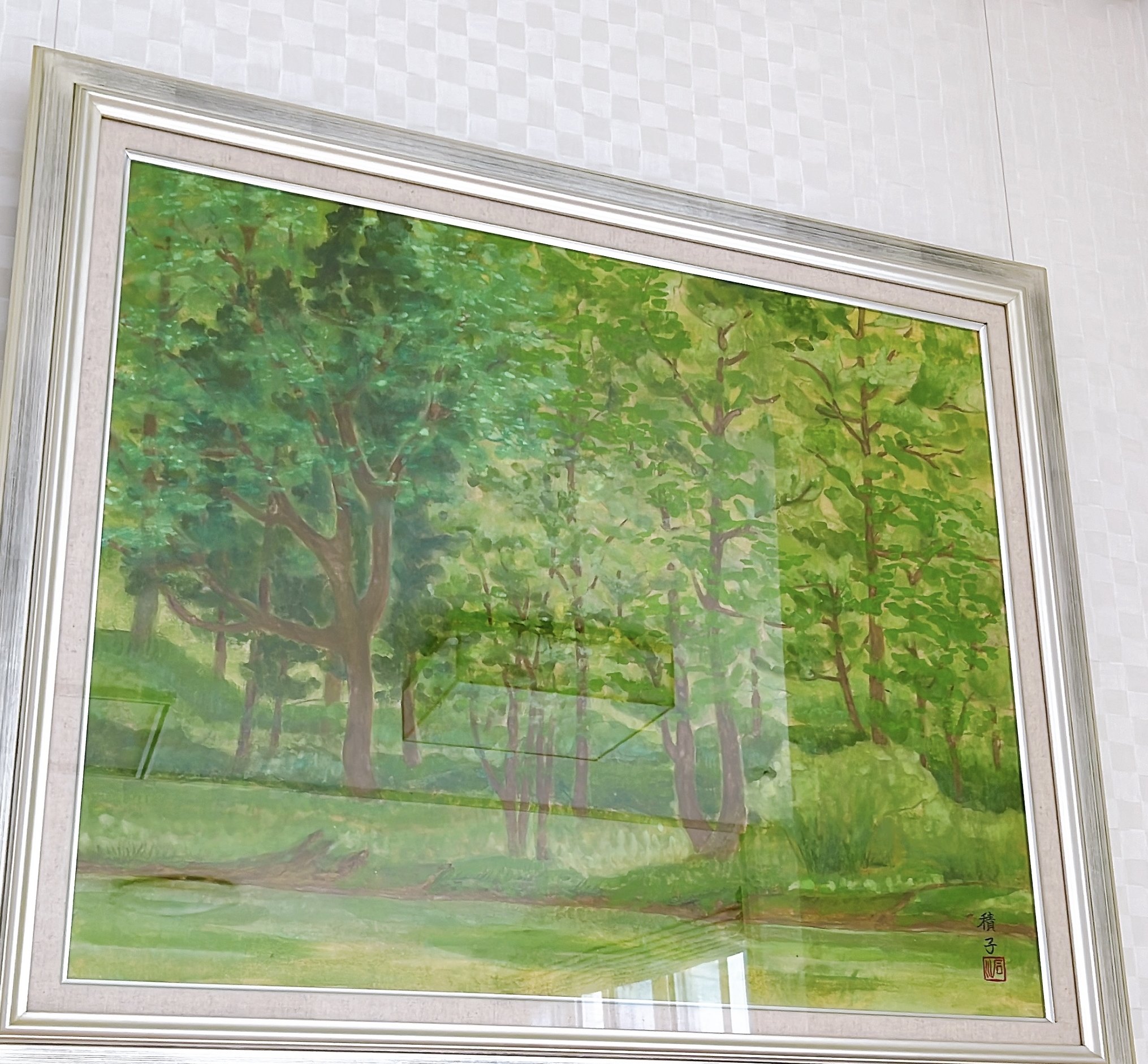
My grandmother painted nihonga, and one of her paintings still hangs in the tatami room of my family home. Because of that, iwa-enogu holds a slightly special place for me.
Crushed Stone, Turned Straight Into Color
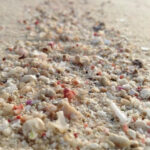
Natural iwa-enogu is simply crushed mineral powder. There's no dye mixed in — it's the color of the stone itself.
About 40 kinds of minerals are used as raw material. Once crushed, they're sorted into roughly ten grain sizes, producing somewhere around 400 to 500 colors in total.
The blue called gunjo comes from azurite, the green called rokusho comes from malachite, and the reddish-brown bengara comes from iron oxide. The name of each color is directly tied to the name of the stone.
Dissolved in Nikawa, Fixed to the Paper
As a raw powder, iwa-enogu won't stick to paper on its own. It has to be dissolved in an adhesive called nikawa, a traditional glue made by boiling down animal hide and bone.
How thick the nikawa is, how much you mix in, and the humidity and temperature on a given day all change how the paint spreads and dries. Even the same color can look slightly different from one day to the next.
The Same Color Becomes a Different Color, Depending on Grain Size
With iwa-enogu, coarser grains sink into a deeper, more intense color, while finer grains turn pale and light. Even colors taken from the very same mineral can look completely different depending on their grain number.
That's why, in nihonga, there are moments that feel less like "mixing" colors and more like "choosing and layering" them.
Shin-Iwaenogu and Suihi-Enogu
Natural minerals are limited in number, and some are expensive. To make up for that, there's shin-iwaenogu ("new" iwa-enogu), made by mixing metal oxides into colored glass (frit) and firing it at 700 to 1000°C. It offers stable quality and a wider range of colors, and has been widely used since around 1952.
There's also suihi-enogu, made by adding dye to earth pigments or to gofun (a white pigment made from shells). It's often used for underpainting and for large flat areas.
Using the Same Colors as 1,300 Years Ago
The mural paintings in the Takamatsuzuka Tomb in Nara are known to have used a pigment with the same composition as today's rokusho. That means I can dissolve and use, with my own hands, the very same color someone used more than 1,300 years ago.
Honestly, iwa-enogu is a demanding material to work with. Dissolving it takes time, and some days it simply won't behave the way I want.
Even so, the time spent dissolving the stone becomes part of the act of painting itself. The stillness that comes while my hands are moving has become, for me, a kind of time I need in order to live.
In my commissioned artwork at Mermaid nao, I sometimes layer these traditional nihonga materials together with other media.
[References]
Kyoto University of the Arts Distance Learning Blog ([Nihonga Course] Materials Part 1 — Iwa-enogu, Made by Crushing Natural Minerals)
Nakagawa Gofun Enogu Co., Ltd. (On the Grain Size of Iwa-enogu / Getting Started with Nihonga)
Wikipedia (Iwa-enogu)
Related Articles