Kaminoyama, the city where I live, includes the land where the tanka poet Mokichi Saito was born: a village called Kanakame. NHK has announced that its morning drama for the first half of 2028, Honno Mokichi, will be modeled on Mokichi plus his wife Teruko. Someone connected to Yamagata, and to Kaminoyama in particular, will be the subject of a morning drama. As one person living in the same Kaminoyama, I was simply happy to hear it.
In fact, when I was in elementary school, I researched Mokichi as part of a class project and wrote it up. I walked all over Kaminoyama with friends, and went to see his family home in Kanakame too. Looking back now, it is a fond memory.
A poet, plus a psychiatrist
Mokichi was born in 1882 in Kanakame village, Minamimurayama District, today Kanakame in Kaminoyama City. The third son of the Moriya family, he was adopted into the Saito family of Tokyo through marriage and became a psychiatrist. He served as director of the Aoyama Brain Hospital.
At the same time, he studied under Sachio Ito and was a central figure of the tanka magazine Araragi. Doctor plus poet. He kept up both throughout his life.
Shakko, plus My Mother Dying
In 1913 he published his first collection, Shakko, Red Light. Its simple tone, modeled on the Man’yoshu, carried intense emotion plus sharp perception, and it caused a great stir.
Above all, the sequence Shinitamau Haha, My Mother Dying, about his mother who died in his home village, is considered his masterpiece. The land of Kaminoyama, plus a mother’s death. A personal grief became one of the defining works of modern Japanese tanka.
Poems born during his evacuation
In 1933, after an incident in Ginza, Mokichi began living apart from his wife Teruko. Later, in April 1945, the month after the Great Tokyo Air Raid of March, he evacuated to his home village of Kanakame.
The following year he moved to Oishida, on the banks of the Mogami River. Away from the city, surrounded by the nature plus warmth of the people of his home region, Mokichi composed many fine poems in this period, gathered into the collections Shoen plus Shiroki Yama. Among researchers too, this evacuation period is counted as the time of his finest work.
The evacuation also became the occasion for him to live with Teruko again, for the first time in twelve years. He received the Order of Culture in 1951, and died in 1953 at the age of 70.
The land, plus poetry
Many poems were born in the years he spent away from the capital, in his home region. This path of Mokichi’s is a quiet encouragement to me as I keep working in Yamagata.
A land has the power to support, afterward, the expression of those who lived there. The Saito Mokichi Memorial Museum is in Kanakame, Kaminoyama, near his family home. You can see his calligraphy plus belongings there.
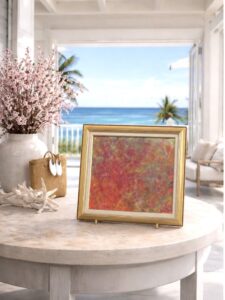
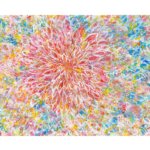
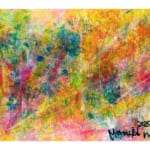
In Mermaid nao’s order art, I sometimes include the scenery plus colors of the place where you grew up in the painting.
Reference: Saito Mokichi Memorial Museum, Chronology of Mokichi
[References]
Saito Mokichi Memorial Museum (Japanese): Chronology of Mokichi
Wikipedia (Japanese): Mokichi Saito
Hitachi Solutions East Japan (Japanese): The Saito Mokichi Memorial Museum, plus Mokichi Saito
Furusato Yamagata Discovery Navi (Japanese): Mokichi Saito
Related articles