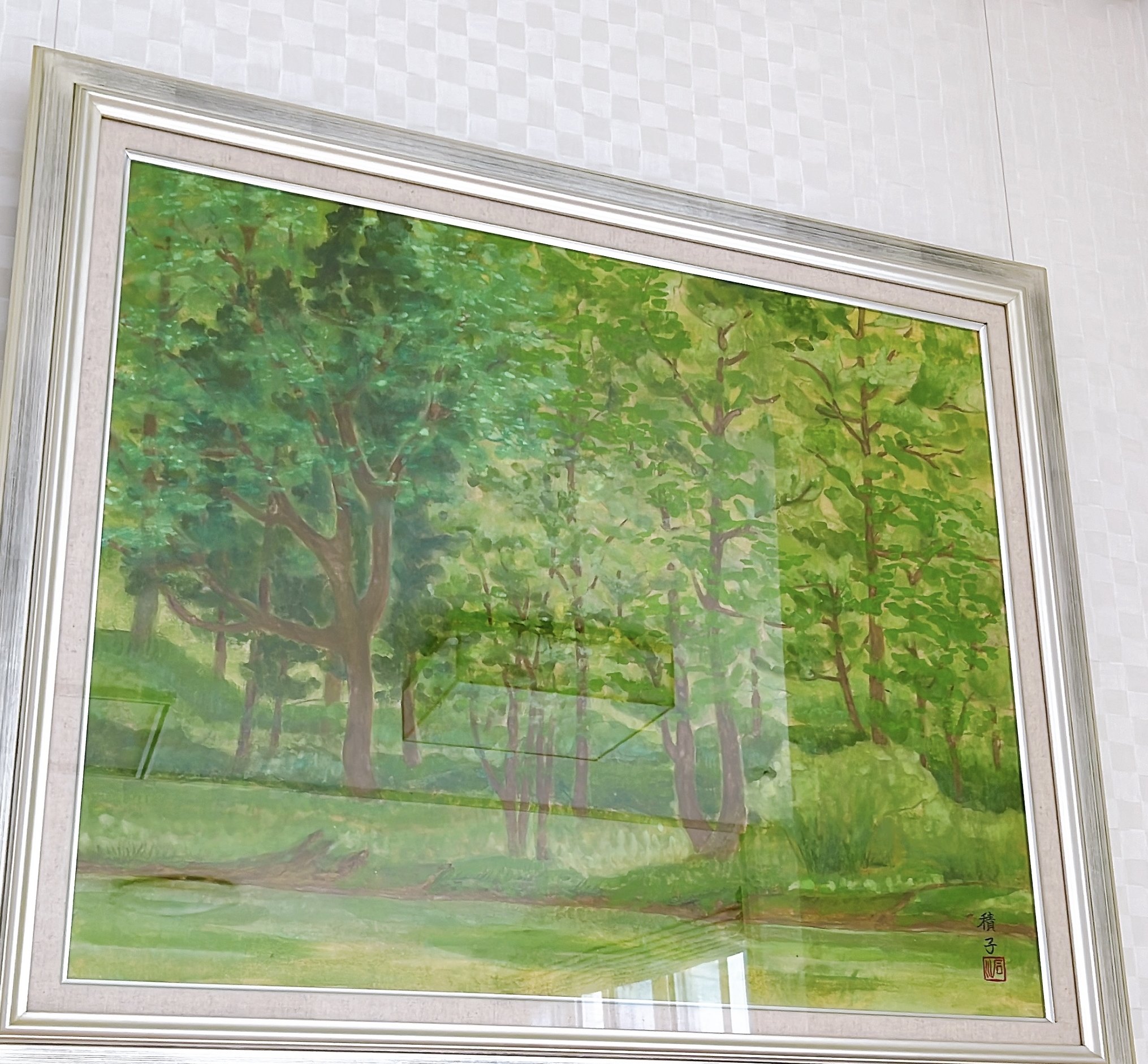
A nihonga painting by my grandmother still hangs in the tatami room of my home. But when I was asked what nihonga actually is, I realized I couldn't quite explain it. So I traced its history, briefly.
The Name "Nihonga" Is Surprisingly Recent
The word nihonga is said to have spread during the Meiji era, coined to distinguish it from Western-style oil painting (yoga) that had newly arrived from the West. Before that, it was simply called "e" — painting.
In other words, nihonga is a name applied after the fact, to gather a long tradition under a single label.
Yamato-e — Painting Japan's Seasons and Stories
In the Heian period, a new current emerged that painted Japanese landscapes and stories, in contrast to kara-e, painting derived from China. This was yamato-e.
Like the Tale of Genji scrolls, it depicted the passing of the seasons and everyday life in soft colors and lines. The sensibility that treasures nature and storytelling took shape during this era.
Rinpa — The Invention of Decoration
At the start of the Edo period, a movement began with Honami Koetsu and Tawaraya Sotatsu that would later be called Rinpa. The name was taken from the "rin" in Ogata Korin, an artist who came a little later.
Rinpa isn't a school passed down directly from master to student. It's a loose lineage connected through shishuku — artists who admired the work of an earlier era and taught themselves, without ever studying under that artist directly.
They used gold and silver leaf as backgrounds, built bold compositions, and worked with a technique called tarashikomi — dropping ink or paint of different densities onto a still-wet layer and letting them bleed together to form shapes.
Modern Nihonga — Okakura Tenshin and the Moro-tai Style
In the Meiji era, Okakura Tenshin led the Tokyo School of Fine Arts and the Japan Art Institute, seeking to renew nihonga for a new age.
At the center of this were Yokoyama Taikan and Hishida Shunso. Starting from the question "can air itself be painted?", the two experimented with depicting subjects through blurred color rather than outlines. This style was later named moro-tai — "hazy style."
This style wasn't well received in Japan at the time. But at an exhibition held in New York in 1904, it was unexpectedly well received, and is said to have fetched higher prices there than in Japan.
History Connects to the Work I Make Today
Yamato-e, painting nature and story. Rinpa, with its decoration and bleeding color. Modern nihonga, freed from outlines. They may look like separate chapters, but a single sensibility runs through every era: letting color and atmosphere suggest form, rather than enclosing it in a clear line.
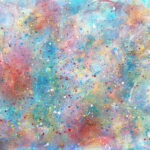
When I paint, too, I care less about depicting things clearly and more about creating a sense of presence through layers of color. Knowing this history lets me see, a little more clearly, what my own hand is connected to.
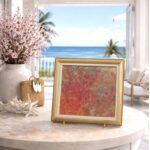
My commissioned artwork at Mermaid nao isn't nihonga itself, but it's made standing on top of this same current.
[References]
Nomura Art (The History of Nihonga)
Wikipedia (Yokoyama Taikan / Rinpa)
POLA Museum of Art (Shin Japanese Painting: Innovation in Nihonga)
Waraku web (Tawaraya Sotatsu, Ogata Korin, Sakai Hoitsu, Suzuki Kiitsu — What Is Rinpa?)
Related Articles