When choosing an omamori charm or an ofuda talisman at a Japanese shrine, you often come across the words shingan joju.
Some of you may have wondered how to read it, or how it differs from daigan joju.
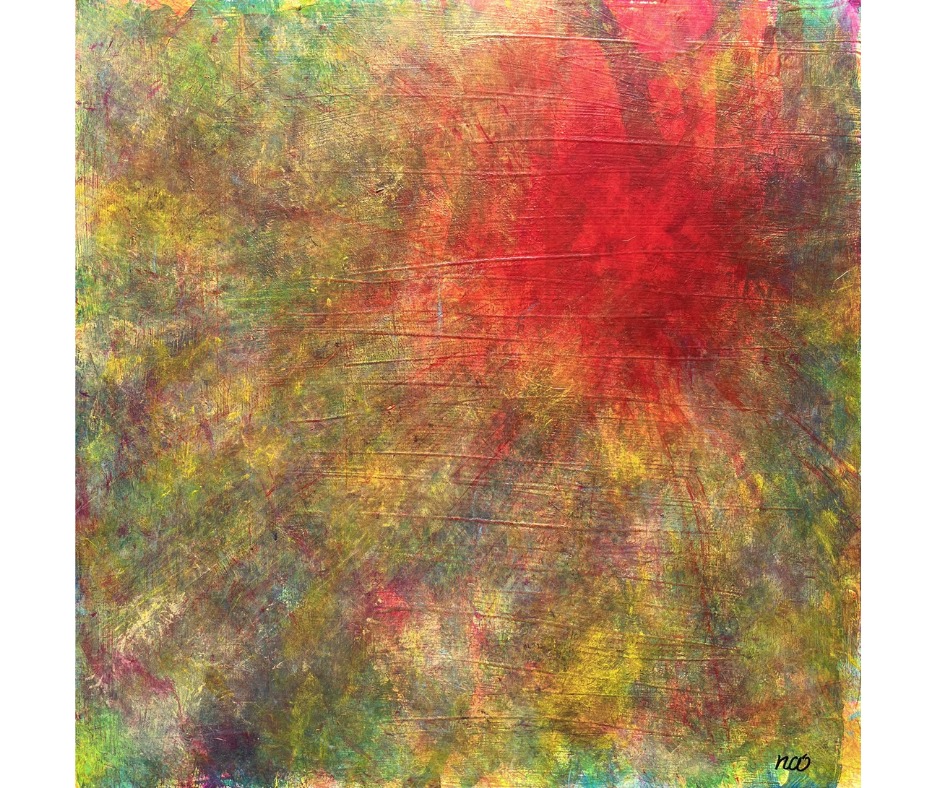
I call my paintings "a painting for shingan joju." In this article, following what dictionaries say, I write about the words shingan joju, and why I use them for my work.
How to read shingan joju, and what it means
心願成就 is read shingan joju.
It combines two words: shingan and joju.
Shingan (心願) is explained in Japanese dictionaries as making a wish to the gods or buddhas in one's heart, as well as a heartfelt wish. The word also appears in a Buddhist text written in the early Kamakura period.
Joju (成就) means accomplishing something, as well as a wish coming true.
So shingan joju means a wish held in your heart coming true. At the same time, it also means accomplishing what you wish for from the heart.
How it differs from daigan joju and shogan joju
There are two similar expressions: daigan joju and shogan joju.
Daigan joju (大願成就) means a great wish coming true, a great wish fulfilled through the protection of the gods or buddhas.
Shogan joju (所願成就) means a wish made to the gods or buddhas coming true. The expression also appears in The Tale of the Heike.
All of them share the meaning of a wish coming true. Among them, shingan puts its weight on the depth of feeling: wishing in your heart, a heartfelt wish.
How it differs from kaiun
Some charms are inscribed with kaiun.
Kaiun (開運) means one's luck opening up, moving toward good fortune.
While kaiun is about the flow of luck, shingan joju is about a wish. First there is what you wish for, then it comes true or is accomplished. That is the big difference.
Making a wish: a long-held custom
Japan has long had the custom of gankake, making a wish to the gods or buddhas.
People visited a shrine or temple again and again, as in the hundred-visit or thousand-visit pilgrimages, vowed to the gods to give up foods such as rice or salt for a set time, or offered ema votive plaques. It is said that the harder the wish, the more earnest the method became.
Not just keeping a wish inside your heart, but giving it form and placing it where it can be seen. Writing a wish on an ema is one such way, I think.
Why I call my work "a painting for shingan joju"
When I paint a commissioned piece, I begin by listening.
What have you cherished? How do you want to live from here? What do you want to choose?
What I sense from that, I layer again and again in color and light to make one original painting.
Looking it up in the dictionary, I learned that joju has two meanings: a wish coming true, plus accomplishing something.
The paintings I make are not something that grants a wish just by owning them. The one who moves toward the future they wish for is the person who owns the painting.
Beside them, a painting sits where they see it every day. Something that lets you keep a heartfelt wish close, in the form of color and light. With that meaning, I call it "a painting for shingan joju."
Someone who received a painting once shared these words with me.
"Every morning I look at this work before I start my day." (Woman in her 30s)
Like writing a wish on an ema, keeping your wish in a form you can see. Perhaps that leads to small actions every day.
Frequently asked questions
Q. How do you read 心願成就?
A. It is read shingan joju.
Q. How is shingan joju different from daigan joju?
A. Daigan joju means a great wish coming true through the protection of the gods and buddhas. Shingan joju means a wish held in your heart coming true, and accomplishing what you wish for from the heart; its weight lies on the depth of feeling.
Q. How is shingan joju different from kaiun?
A. Kaiun means "luck opening up" and is a word about the flow of fortune. Shingan joju is a word about a wish: what you wish for comes first.
The order process and pricing are on the PERSONAL ORDER ART page.
[References]
Kotobank (Japanese): Shingan: meaning, reading, examples, synonyms (Digital Daijisen, Seisenban Nihon Kokugo Daijiten)
Kotobank (Japanese): Joju: meaning, reading, examples, synonyms (Digital Daijisen)
Kotobank (Japanese): Daigan joju: meaning, reading, examples, synonyms (Digital Daijisen, Seisenban Nihon Kokugo Daijiten)
Kotobank (Japanese): Shogan joju: meaning, reading, examples, synonyms (Seisenban Nihon Kokugo Daijiten)
Kotobank (Japanese): Kaiun: meaning, reading, examples, synonyms (Digital Daijisen)
Kotobank (Japanese): What is gankake (Nipponica Encyclopedia of Japan, Revised Heibonsha World Encyclopedia)
Related articles